

What is Considered Industrial Equipment? Classifying Heavy Machinery and Oilfield Hardware
From manufacturing facilities and oilfield sites to processing plants and construction operations, industrial systems rely on specialized machinery and components to keep production moving efficiently. A common question for procurement managers, safety inspectors, and facility operators is: What is considered industrial equipment? While many people immediately think of forklifts, assembly lines, or bulldozers, the true definition extends far deeper.
Industrial equipment refers to the machines, tools, mechanical systems, and heavy-duty components used to support industrial operations such as manufacturing, material handling, energy production, machining, and large-scale processing. These systems are designed for durability, high performance, and continuous operation in demanding environments.
Understanding what is considered industrial equipment helps businesses select the right machinery, maintain operational efficiency, and ensure safe performance across industrial applications.
Common Types of Industrial Equipment
Industrial equipment covers a broad range of machines and systems depending on the industry and application.
1. Material Handling Equipment
This includes the machinery used to move, store, and control materials within a facility or job site.
Examples include:
- Conveyors
- Forklifts
- Hoists
- Cranes
- Pallet systems
These systems help improve productivity and reduce manual labor requirements.
2. Production and Manufacturing Machinery
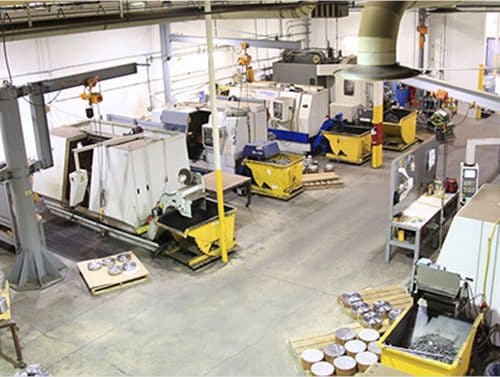
These are the assets that actively alter raw materials. Manufacturing facilities rely on machines designed to fabricate, assemble, or process materials into finished products.
Examples include:
- CNC machines
- Lathes
- Milling machines
- Presses
- Welding systems
- Injection molding machines
These systems are essential for precision production and repeatable manufacturing processes.
3. Power Generation and Fluid Power Systems
Equipment designed to generate or harness energy to drive operations or industrial facilities often requires equipment capable of generating or transferring power.
Examples include:
- Hydraulic pumps
- Compressors
- Generators
- Turbines
- Hydraulic cylinders
These systems support heavy-duty operations across multiple industries.
4. Pressure Containment and Flow Control Systems
Often overlooked in broad definitions, this is the most critical class of heavy industrial machinery. It comprises the specialized hardware engineered to direct, isolate, and control high-pressure fluids and gases. In Western Canada, this infrastructure forms the backbone of the energy sector.
Examples include:
- Wellhead equipment
- Flanges
- Adapter spools
- Valves
- Pressure-control systems
- Studded crosses
These components are often manufactured to strict industry standards such as API specifications.
5. Custom Machined Components
Many industrial operations depend on custom-manufactured parts built for specialized equipment or unique applications.
Examples include:
- Custom flanges
- Threaded adaptors
- Pressure-rated fittings
- Precision-machined replacement components
Custom machining is especially valuable when standard components are unavailable or incompatible.
The Oilfield Hardware Classification: High-Pressure Engineering
Within the scope of industrial-grade hardware, oilfield components require some of the most stringent manufacturing tolerances on earth.
Key examples of precision-machined industrial equipment in this category include:
-
Spool Adaptors: Critical structural connections used to bridge different pressure ratings or sizes in a pipeline or wellhead stack-up, safely managing massive vertical loads.
-
Studded Tees & Studded Crosses: Heavy, solid-block flow manifolds machined from raw forgings to route high-velocity fluids in compact footprints.
-
Companion Flanges: Heavy-duty connection rings that rely on precise metal-to-metal ring grooves to lock together high-pressure piping networks.
-
Bottom Hole Test Adapters: Specialized entry hardware that acts as a secure, leak-proof gate for well intervention tools operating in live, pressurized environments.
What Separates Industrial Equipment from Commercial Hardware?
You cannot swap an industrial component with standard commercial hardware, even if they look similar on paper. Industrial-grade equipment is defined by three strict engineering markers:
-
Extreme Metallurgy: Commercial hardware uses standard carbon steel or iron. Industrial equipment requires forged alloys like 4130 steel or 316 Stainless Steel, treated to withstand brutal Canadian winters (-46°C) and corrosive sour gas (H2S) under NACE MR0175 standards.
-
Massive Scale and Weight: Industrial parts are built with thick walls to withstand extreme physical forces. Facilities specializing in industrial fabrication in Edmonton utilize heavy machinery capable of milling parts weighing thousands of pounds.
-
Rigid Material Traceability: Every piece of heavy industrial pressure hardware must possess verifiable mill test reports (MTRs), ensuring the metal’s exact chemical makeup is documented for liability and safety compliance.
Understanding the Role of Industrial Equipment
So, what is considered industrial equipment?
Industrial equipment includes the heavy-duty machines, systems, and precision components used to support manufacturing, energy production, material handling, machining, and industrial processing operations. From CNC machines and wellhead systems to pumps, flanges, and custom-machined parts, industrial equipment is designed for performance, durability, and operational reliability.
Understanding industrial equipment helps businesses make informed decisions about machinery, maintenance, and operational efficiency in demanding environments.
Need certified hardware built for heavy industrial environments?