

Stainless Steel Spools: Applications, Benefits, and Their Role in Spool Adaptors
In industrial piping and mechanical systems, reliability, strength, and corrosion resistance are critical. One component that plays a key role in connecting, spacing, and adapting pipeline systems is the spool adaptor—and at the center of many high-performance designs are stainless steel spools.
This article explains what stainless steel spools are, how they function within spool adaptors, and why they are widely used across demanding industrial applications. Understanding their purpose and advantages helps engineers, designers, and maintenance teams make informed material and design decisions.
What Are Stainless Steel Spools?
Stainless steel spools are precision-machined cylindrical sections of pipe or solid material designed to connect, extend, or adapt piping systems. They are often installed between flanges, fittings, valves, or other components to achieve correct spacing, alignment, or pressure containment.
When used as part of a spool adaptor, stainless steel spools serve as the structural body that allows two mismatched connections—such as different sizes, pressure ratings, or connection types—to work together safely and efficiently.
What Is a Spool Adaptor?
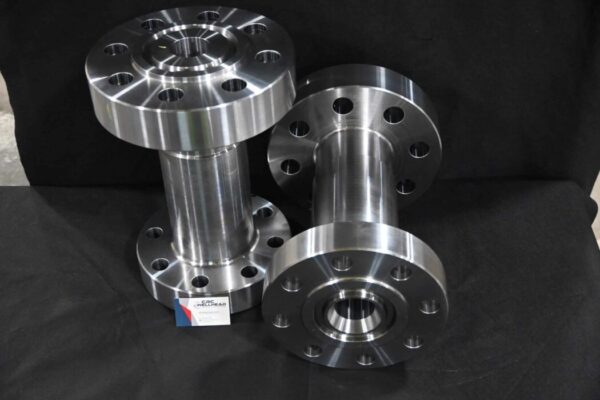
A spool adaptor is an engineered piping component used to bridge gaps between equipment or pipeline sections. It may include:
-
Stainless steel spools
-
Flanges
-
Transitions
-
Studded ends
-
Custom-machined interfaces
Spool adaptors are commonly used where standard fittings are not sufficient, or where precise alignment and pressure control are required.
Why Stainless Steel Is Used for Spools
Material selection is critical in industrial environments, and stainless steel offers several advantages that make it ideal for spool adaptors.
1. Corrosion Resistance
Stainless steel spools resist corrosion caused by:
-
Moisture
-
Chemicals
-
Industrial fluids
-
Harsh environments
This makes them suitable for long-term use in aggressive operating conditions where carbon steel may degrade faster.
2. High Strength and Durability
Stainless steel maintains structural integrity under:
-
High pressure
-
Temperature fluctuations
-
Mechanical stress
This strength is essential for spool adaptors that operate as part of pressurized systems.
3. Dimensional Stability
Precision machining ensures stainless steel spools maintain consistent dimensions. This accuracy is vital for:
-
Proper sealing
-
Alignment
-
Load distribution
-
Leak prevention
4. Long Service Life
Because stainless steel resists rust, wear, and chemical attack, stainless steel spools typically offer a longer service life and reduced maintenance requirements.
Common Uses of Stainless Steel Spools in Spool Adaptors
Understanding where stainless steel spools are used helps clarify their importance in mechanical and industrial systems.
**Pipeline Connections and Extensions
Stainless steel spools are frequently used to:
-
Extend pipeline length
-
Adjust spacing between components
-
Connect equipment with fixed distances
They provide a reliable solution when standard pipe lengths are not suitable.
**Pressure Containment Systems
In pressurized systems, spool adaptors with stainless steel spools help maintain system integrity by:
-
Supporting pressure loads
-
Preventing deformation
-
Maintaining consistent sealing surfaces
**Custom Equipment Integration
Industrial facilities often integrate equipment from multiple suppliers. Stainless steel spools allow spool adaptors to:
-
Match different connection standards
-
Accommodate non-standard dimensions
-
Align mismatched flanges or fittings
**Maintenance and System Modifications
Spool adaptors with stainless steel spools allow easier system modification without cutting or reworking major pipeline sections. This flexibility reduces downtime and labor costs.
Types of Stainless Steel Spools
Stainless steel spools used in spool adaptors can vary depending on system requirements:
-
Straight spools for spacing and alignment
-
Stepped or transitioned spools for size changes
-
Flanged spools for bolted connections
-
Custom-machined spools for specialized applications
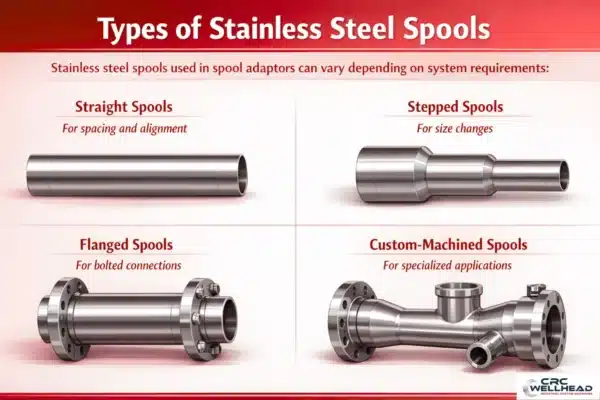
Each type is engineered to meet specific dimensional, pressure, and operational needs.
Manufacturing Considerations for Stainless Steel Spools
Producing high-quality stainless steel spools requires:
-
Precision CNC machining
-
Skilled manual machining where needed
-
Strict dimensional control
-
Proper material selection
-
Quality inspection and testing
Accurate machining ensures proper fit-up, sealing, and performance once installed in a spool adaptor assembly.
Advantages of Stainless Steel Spools Over Other Materials
Compared to other materials, stainless steel spools offer:
-
Better corrosion resistance than carbon steel
-
Greater durability in demanding environments
-
Improved cleanliness for sensitive applications
-
Lower long-term maintenance costs
-
Strong performance under pressure and temperature changes
These benefits make stainless steel the preferred choice for many industrial spool adaptor applications.
Why Stainless Steel Spools Matter
Stainless steel spools are essential components in modern industrial piping systems. When used in spool adaptors, they provide strength, corrosion resistance, dimensional accuracy, and long-term reliability. Their ability to adapt systems, support pressure, and withstand harsh conditions makes them a critical solution across many industrial applications.
Choosing the right spool design and material helps ensure safe operation, system efficiency, and reduced downtime.
Looking for high-quality stainless steel spools or custom spool adaptors built to perform in demanding industrial environments?
Partner with CRC Wellhead Supply for precision-machined, Canadian-made solutions designed for durability, accuracy, and long-term reliability.
Contact CRC Wellhead Supply today to discuss your project requirements or request a custom machining quote from our experienced engineering and machining team.