

Companion Flange vs Threaded Flange: Key Differences in Industrial Piping Systems
When designing a piping system or wellhead assembly, selecting the right connection type is the difference between a seamless installation and a costly leak. Two terms that often cause confusion for procurement managers and technicians are the companion flange and the threaded flange.
While they may look similar at a glance, they serve distinct roles in industrial infrastructure. Understanding the nuances of companion flange vs threaded flange is essential for ensuring system integrity and Maximum Performance.
This article breaks down their definitions, design features, use cases, and how to decide which flange is best for your system.
What Is a Threaded Flange?
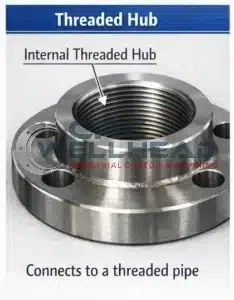
A threaded flange is a pipe flange with internal threads that allow it to be screwed directly onto a threaded pipe. It does not require welding, making it ideal for systems where welding is impractical or not permitted.
Key Characteristics of a Threaded Flange
-
Internally threaded bore (commonly NPT or API threads)
-
Screws directly onto a pipe
-
Bolts to another flange to complete the connection
-
Commonly used in low to moderate pressure systems
Threaded flanges are widely used in mechanical, industrial, and utility piping systems where ease of installation and removal is important.
What Is a Companion Flange?
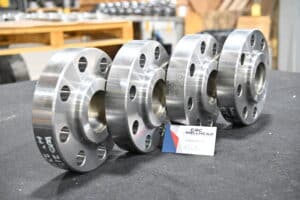
A companion flange is a functional designation. It is any flange designed to “mate” or accompany another flange to complete a connection. Most often, a companion flange is also a threaded flange, used to transition a flanged piece of equipment to a threaded pipe string.
New to this component? For a deeper dive into the fundamentals, read our recent guide: What is a Companion Flange?
Companion Flange vs Threaded Flange: The Core Difference
The main difference between a companion flange vs threaded flange lies in function and application, not just design.
-
A threaded flange refers broadly to any flange that screws onto a pipe.
-
A companion flange refers specifically to a threaded flange whose primary purpose is to mate with another flange, often on equipment or a blind flange.
In practice, the term companion flange is often used when the threaded flange is acting as the matching half of a bolted flange pair.
Design and Functional Comparison
1. Connection Method
Threaded Flange
-
Screws onto threaded pipe
-
Bolts to a mating flange
Companion Flange
-
Screws onto threaded pipe
-
Specifically intended to mate with another flange
➡️ Both use threaded pipe connections, but the companion flange is defined by its pairing function.
2. Application Purpose
Threaded Flange
-
General piping connections
-
Low to moderate pressure systems
-
Temporary or maintenance-access installations
Companion Flange
-
Connecting pipes to valves, pumps, or equipment
-
Pairing with blind flanges for isolation
-
Systems requiring easy disassembly
➡️ Companion flanges are typically selected for equipment interfaces.
3. Pressure and Temperature Considerations
Both flange types are best suited for:
-
Low to moderate pressure
-
Controlled temperature environments
Because threaded connections can loosen under vibration or thermal cycling, neither flange type is typically recommended for extreme pressure or high-temperature services without proper engineering evaluation.
4. Maintenance and Accessibility
Threaded Flange
-
Easy to install
-
Can be removed without cutting or welding
Companion Flange
-
Designed for repeated removal and reinstallation
-
Ideal for systems requiring frequent access
➡️ Companion flanges are often preferred where maintenance access is critical.
When to Use a Threaded Flange
A threaded flange is typically used when:
-
Welding is not allowed or practical
-
The system operates at lower pressures
-
Installation speed is a priority
-
The piping system is relatively simple
Threaded flanges are common in utilities, mechanical rooms, and general industrial piping.
When to Use a Companion Flange
A companion flange is the better choice when:
-
Connecting a threaded pipe to a valve or piece of equipment
-
Pairing with a blind flange for isolation
-
Frequent maintenance or inspection is required
-
A removable flange connection is preferred
In many systems, companion flanges provide greater flexibility without permanent modification to the piping.
Materials Used for Companion and Threaded Flanges
Both flange types are available in materials such as:
-
Carbon steel
-
Stainless steel
-
Alloy steel
Material selection depends on corrosion resistance, pressure rating, temperature, and the operating environment.
Advantages and Limitations
Advantages
-
No welding required
-
Faster installation
-
Easier system modification
-
Reduced downtime
Limitations
-
Not ideal for high vibration
-
Lower pressure ratings compared to welded flanges
-
Threads must be properly sealed to prevent leaks
Companion Flange vs Threaded Flange
When comparing a companion flange vs threaded flange, the difference comes down to application intent. A threaded flange is a general category, while a companion flange is a threaded flange specifically designed to mate with another flange—often at equipment or isolation points.
Selecting the right flange improves system reliability, safety, and maintenance efficiency. Understanding how these flange types function ensures your piping system is designed for long-term performance.
If your application requires precision-machined companion flanges or threaded flanges, CRC Wellhead Supply provides Canadian-made industrial solutions built for accuracy, reliability, and performance. With CNC and manual machining capabilities, CRC supports standard and custom flange requirements for demanding industrial environments.
Contact CRC Wellhead today to discuss your project or request a machining quote.