

CNC vs Manual Machining: What’s the Difference and Which Is Better for Your Project?
In the industrial and manufacturing world, machining remains one of the most important processes for creating precise, durable, and functional components. Whether it’s parts for heavy equipment, industrial machinery, automotive applications, or custom-engineered components, machining quality directly affects performance and safety.
Two of the most common methods are CNC machining and manual machining. While both share the same purpose—removing material to create a shaped part—their processes, capabilities, and best-use cases differ significantly. Understanding the differences between CNC vs manual machining helps engineers, technicians, procurement teams, and manufacturers choose the right method for their specific project requirements.
This guide breaks down how each process works, their advantages, and the situations where one may be preferred over the other.
What Is CNC Machining?
CNC (Computer Numerical Control) machining is a manufacturing process where cutting tools and machine movements are controlled by computer programming. A digital file guides precision tools such as lathes, mills, or routers to shape the material with exact accuracy.
How CNC Machining Works
-
A CAD (Computer-Aided Design) model is created.
-
The model is converted into G-code, which tells the CNC machine how to move.
-
The machine automatically performs the cutting, drilling, shaping, or milling process.
-
The result is a highly precise part with tight tolerances.
Common Uses
-
High-precision industrial components
-
Complex geometries
-
Large production runs
-
Consistent repeatability
-
Parts requiring tight tolerances or smooth finishes
CNC machining is heavily used in aerospace, energy, automotive, and manufacturing industries.
What Is Manual Machining?
Manual machining uses traditional machine tools operated by a machinist who physically controls cutting speed, feed rate, tooling position, and other functions. Common equipment includes manual lathes, mills, and drill presses.
How Manual Machining Works
-
A machinist sets up the raw material.
-
They position and adjust cutting tools manually.
-
The machinist controls depth, angle, feed, and rotation using hand wheels and levers.
Manual machining requires skill, experience, and craftsmanship.
Common Uses
-
Simple parts
-
One-off components
-
Large or heavy workpieces that don’t require extreme precision
-
Quick adjustments or modifications
Manual machining also plays a key role in toolmaking, repair work, and prototyping.
CNC vs Manual Machining: Key Differences
To understand the strengths of each method, it’s important to compare them side-by-side.
1. Precision and Accuracy
CNC Machining:
-
Extremely high precision
-
Can hold tight tolerances consistently
-
Suitable for complex, technical, or safety-critical parts
Manual Machining:
-
Accuracy depends on machinist skill
-
Suitable for basic tolerances but not extreme precision
-
Inconsistent repeatability
Verdict: CNC machining wins for precision-critical components.
2. Production Speed
CNC Machines:
-
Faster cycle times
-
Automated operation
-
Can run continuously and produce identical parts
Manual Machines:
-
Slower, hands-on process
-
Longer setup and machining time
-
Ideal for simple or low-quantity work
Verdict: CNC machining is significantly faster for medium to large production runs.
3. Complexity of Parts
CNC Machining:
-
Excellent for intricate shapes, curves, pockets, and multi-axis machining
-
Able to produce parts that are impossible with manual tools
Manual Machining:
-
Best for straight cuts, simple shapes, or basic features
-
Limited to machinist skill and machine capability
Verdict: CNC machines handle complexity far better.
4. Cost Efficiency
CNC Machining:
-
Higher initial setup cost
-
Lower cost per part for large batches
-
Saves money on repeatability and reduced scrap
Manual Machining:
-
Lower upfront cost
-
Ideal for single parts or quick modifications
-
Less expensive for small, simple jobs
Verdict:
-
Manual machining is cost-effective for small quantities.
-
CNC machining is more economical for larger runs or complex parts.
5. Skill Requirements
CNC Machining:
-
Requires programming and technical knowledge
-
Machines do most of the physical work
Manual Machining:
-
Requires hands-on craftsmanship and years of experience
-
Machinist controls every step
Both require expertise—just in different forms.
When Should You Choose CNC Machining?
CNC machining is the best choice when your project requires:
-
Tight tolerances
-
Detailed geometries
-
High accuracy
-
Consistent repeatability
-
Medium to high production volumes
-
Complex industrial or mechanical components
-
Parts with strict quality and safety requirements
Industries like oil & gas, aerospace, precision manufacturing, and industrial equipment rely heavily on CNC machining for these reasons.
When Is Manual Machining the Better Choice?
Manual machining is ideal when:
-
You need a single prototype or part
-
The design is simple
-
The part is large or irregular
-
You require quick adjustments or rework
-
Tight tolerances are not necessary
-
Cost must be minimized for small jobs
Repair shops, toolmakers, industrial maintenance teams, and general machine shops often rely on manual machining for speed and flexibility.
CNC vs Manual Machining: Which One Is Right for You?
There is no “best universal method.” The right choice depends on:
-
Project complexity
-
Required tolerances
-
Material type
-
Budget and timeline
-
Quantity of parts needed
Most modern machine shops use both CNC and manual machining because they complement each other. CNC handles the precise, complex, and repeatable work, while manual machining supports customization, repair, and simpler tasks.
Final Thoughts
Both CNC and manual machining play vital roles in the industrial and mechanical sectors. Understanding the differences helps you select the most effective method for producing safe, reliable, and high-performing components.
The CRC Advantage: Strategic Dual Capability
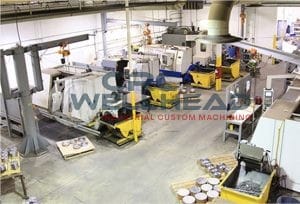
At CRC Wellhead Supply, our competitive edge lies in our strategic use of both methods. We offer Custom CNC and Manual Machining solutions under one roof.
-
Precision and Scale: Our CNC fleet handles the core, large-scale, high-precision industrial work. This allows us to manufacture durable, high-performance components up to 3,000 lbs with digital accuracy.
-
Speed and Flexibility: Our dedicated manual shop is vital for fast-turnaround repairs, quick modifications to existing customer components, or creating custom tooling. This flexibility minimizes client downtime and maximizes cost efficiency.
-
Integrated Quality: Whether the part is CNC-generated or manually adjusted, it passes through the same API Q1 certified quality management system.9 Our in-house engineers and machinists ensure every piece meets the Canadian Quality standard before delivery across North America.
Choosing the right machining process is not about choosing the newest technology; it’s about selecting the method that guarantees Maximum Performance for your specific component. Trust CRC Wellhead Supply to apply the right process every time.
Contact us today to leverage our four decades of dual machining expertise for your next custom industrial project.